
A Complete Guide to Choosing a Rehabilitation Hospital or Facility in Kanagawa Prefecture: Costs ...
query_builder
2025/10/30
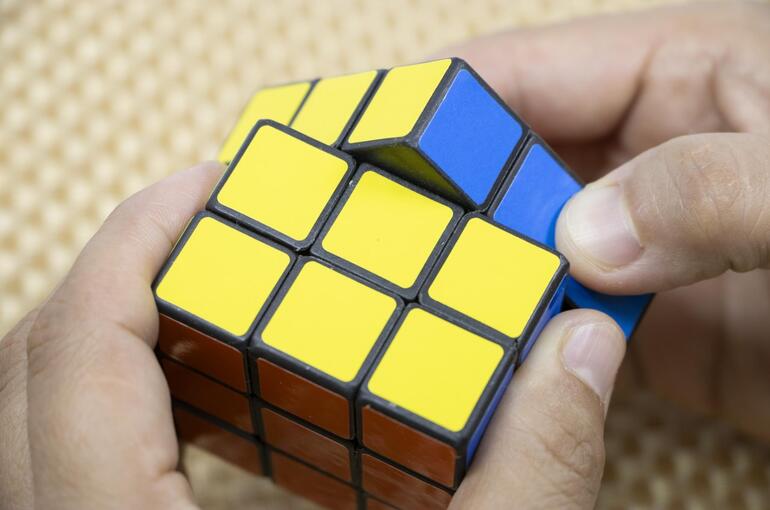
Are you looking for tools to use in rehabilitation, but are unsure of what to choose? Especially for those with aftereffects of cerebral infarction or hemiplegia due to old age, the key issue in hand and finger rehabilitation is to achieve both continuity and effectiveness.
Among them, the Rubik's Cube is surprisingly attracting attention. It is a traditional 3D puzzle, but now it is being reevaluated in the medical and welfare fields. In the rehabilitation menu leading to the improvement of activities of daily living (ADL), a method that simultaneously stimulates vision, touch, and thinking is attracting attention, and the Rubik's Cube is a prime example of this.
"It's easy to use at home, and it's easy to keep using it because it feels like a game," and "It's more affordable than dedicated rehabilitation equipment," are some of the comments, and the shop reviews are full of positive feedback. Some rehabilitation facilities have already introduced it, and there are reports that it has actually contributed to improving executive function and maintaining concentration.
In this article, we will introduce the types of Rubik's Cubes suitable for rehabilitation from among the many puzzles available, according to purpose, and provide an easy-to-understand comparison table of size, weight, grip, etc. By reading to the end, you will be able to choose the model that is best suited for you and your family with peace of mind. If you leave it alone, you may miss out on valuable rehabilitation time and benefits. Get the best choice now.
LAP Corporation has developed and provides the Power Assist Series to support rehabilitation at home for people with hemiplegia due to cerebral infarction or accidents. This series is a robot that uses air pressure to gently move paralyzed joints in the fingers, ankles, and wrists to assist rehabilitation training. It can be easily used at home, enabling continuous rehabilitation. The product lineup includes the Power Assist Hand for fingers, the Power Assist Leg for ankles, and the Power Assist Wrist for wrists, and is compatible with the rehabilitation of each part of the body. Through these rehabilitation assistance robots, we will contribute to the recovery of function and improvement of the quality of life of everyone.
目次
At first glance, the Rubik's Cube may look like a simple three-dimensional puzzle, but it is actually a tool that involves advanced intellectual tasks that simultaneously activate multiple areas of the brain. In recent years, the use of the Rubik's Cube has been attracting attention, especially in rehabilitation and improving the cognitive function of the elderly. We will explain in detail from a scientific perspective why such puzzles have an effect on the brain.
First of all, operating a Rubik's Cube requires spatial awareness, planning, manual dexterity, and the ability to process visual information. All of these activate important parts of the brain, such as the prefrontal cortex, parietal lobe, and hippocampus. The reason it is recommended as a method of brain rehabilitation is due to the stimulation of the prefrontal cortex in particular. The prefrontal cortex is an area involved in "executive function" and "attention control," and by continuing to perform tasks such as the Rubik's Cube, it is expected that people with attention disorders and executive dysfunction will improve.
For example, executive function is the ability to set goals, execute them, and achieve a purpose while correcting any problems that arise along the way. The task of solving a Rubik's Cube naturally trains executive function because it uses this function repeatedly. In addition, constantly thinking about "which side should be moved" also leads to strengthening attention and short-term memory.
People with attention problems, especially those with higher brain dysfunction, have difficulty with dual tasks (multitasking). The Rubik's Cube is an ideal training tool, as it requires the simultaneous processing of visual information, judgment, and manual manipulation.
Next, let's look at the relationship between hand and finger movements and the brain. Recent rehabilitation research has confirmed that moving your hands activates the sensory and motor areas of the brain, promoting neuroplasticity (reorganization of neural circuits). Like the "rehabilitation drills" and "hand rehabilitation goods" often used in hemiplegia rehabilitation, the Rubik's Cube stimulates the brain while cultivating dexterity in the hands and fingers.
Below is a table summarizing the specific effects that using a Rubik's Cube has on the brain:
| Stimulated brain functions | Effects/Ability to be improved | Related obstacles and challenges |
| Prefrontal cortex | Executive function, planning, and judgment | Executive dysfunction, higher brain dysfunction |
| Parietal lobe | Spatial recognition, visual information processing | Unilateral spatial neglect, attention disorder |
| Hippocampus | Memory, spatial memory | Short-term memory loss, early symptoms of dementia |
| Motor and sensory areas | Finger movement, touch | Hemiplegia, paralysis of the hands, rehabilitation stagnation |
Furthermore, it can also be used as training for switching attention. If you try to focus on just one side, the overall balance will be lost, so you need to constantly train yourself to look at the whole picture. This repetition of switching ability is very effective in attention disorder rehabilitation programs.
From the perspective of "what kind of brain training is effective in rehabilitation after cerebral infarction," the Rubik's Cube has the advantage of being able to utilize more functions at the same time than other brain training methods. There are also many free apps and simplified versions of the cube, making it easy to continue.
As the co-occurring words "puzzle," "completion," "time," "three-dimensional," "competition," "cerebral infarction," and "brain training" suggest, the Rubik's Cube is not just a toy but a three-dimensional intellectual challenge, an ideal training tool for improving concentration and achieving a sense of accomplishment in a short amount of time.
The Rubik's Cube is not just a puzzle for entertainment. It is an excellent rehabilitation tool, especially for those who suffer from hemiplegia, hand paralysis, fine motor disorders, and higher brain dysfunction caused by cerebral infarction or cerebral hemorrhage. Here, we will explain in detail the scientific mechanism behind it and why rehabilitation using puzzles is so effective.
First of all, the important thing in hand and finger rehabilitation is whether or not you can continue repetitive movements while having fun. Rehabilitation requires time, perseverance, and motivation, but monotonous exercises tend to make people bored and less likely to continue. That's where a puzzle-type rehabilitation tool that combines game-like elements and a sense of accomplishment proves effective.
The Rubik's Cube has the following advantages:
Below is a table summarizing the effect of training with a Rubik's Cube on the recovery of finger function.
| Functional elements | Training effect details | Target rehabilitation tasks |
| Finger dexterity | Improve individual finger manipulation skills. Training through repeated pinching and twisting. | Hemiplegia, paralysis of the hand, contracture |
| Strength and flexibility | Increase grip strength and range of motion in pronation and supination. Maintain joint flexibility. | Preventing contractures and adjusting muscle tone |
| Bimanual Coordination | Promotes coordination by using both hands at the same time | Mild to moderate paralysis and neurological rehabilitation |
| Motor planning ability | Strengthen your executive function by thinking about "which direction to turn" | Higher brain dysfunction/executive disorder |
| Spatial awareness | Train spatial understanding by understanding the relative positions of surfaces and selecting operations | Visual spatial agnosia/visual field defect |
In particular, elderly people with hemiplegia often have limited movements necessary for activities of daily living (ADL), such as grasping and pinching, and recovery of these movements is an important rehabilitation goal. By using the Rubik's Cube, the fine finger movements required for daily life can be repeated in a game-like manner, making it easier to continue for a long time than monotonous rehabilitation, and more likely to have a positive psychological effect.
Another advantage of the Rubik's Cube is that it allows for gradual achievement. For example, you can start by matching the colors on just one side, then two sides, and finally set a goal of matching all six sides, making it possible to adjust the difficulty level according to your level. This is very suitable for "goal-directed rehabilitation" and helps maintain motivation.
As auxiliary tools, large-sized Rubik's cubes that are easy to use with one hand, grip types with non-slip surfaces, and lightweight models that rotate smoothly are also available on the market, allowing users to choose the right tool based on the level of their disability. Below is a comparison of the features of some of the most common products.
| Product name | size | Features | Level of support | Price range |
| Large ball grip type | Approximately 8cm square | Easy to operate even with weak grip strength, with anti-slip function | Elderly/Hemiplegia | Approximately 3,000 yen |
| Smooth Rotation Model | Approximately 5.7cm square | Can be turned with little force, less strain on the hands | Mild to moderate paralysis | Approximately 2,500 yen |
| Built-in magnet | Approximately 5.5cm square | The surfaces are easily aligned, giving a sense of accomplishment | Dementia prevention/elderly people | Approximately 3,500 yen |
Some rehabilitation facilities have incorporated their own unique menus that utilize the Rubik's Cube, such as "completing just one side within a time limit" or "rotating the cube while memorizing the sequence of colors with your other hand," and have proven to be effective in treating attention disorders and executive function disorders.
In addition, playing together as a family can stimulate communication and provide emotional support. Collaborative brain training, which is conducted with family members as part of dementia prevention, is an approach that has been attracting attention in elderly rehabilitation in recent years.
In this way, the Rubik's Cube is becoming increasingly recognized as a "rehabilitation tool," and it is especially valued for the fact that it can be learned without financial burden, thanks to the free instruction videos available on YouTube.
For readers who are supporting a family member with a stroke or hemiplegia, or who are looking for an effective rehabilitation method that can be done at home, the Rubik's Cube is a highly recommended hand and finger rehabilitation tool that is both cost-effective and scientifically backed. Another big attraction is that it is fun to continue using and can be naturally incorporated into daily life.
For the elderly and those with aftereffects of cerebral infarction or hemiplegia, continuity is key in home rehabilitation. However, in many cases it is difficult to do it alone, so support from family and caregivers is extremely important. In particular, when it comes to training using 3D puzzles such as Rubik's Cubes, a little encouragement or practice ingenuity can make a big difference in the individual's motivation and concentration.
It has been scientifically proven that the Rubik's Cube activates a wide range of the brain, as it simultaneously stimulates fine finger movements, visual information processing, spatial awareness, and memory. To make the most of this characteristic, it is necessary to incorporate it into your daily life as a fun form of brain training, rather than a form of rehabilitation that you are forced to do.
Next, we will provide specific lists and tables of ways that family members and caregivers can provide support and what points to talk to the patient.
Five ways for families and caregivers to provide support
Rubik's Cubes are not just attractive as puzzles, but are also expected to have various rehabilitation effects, such as training finger dexterity, spatial awareness, and attention. However, when using them for rehabilitation purposes, it is essential to "select the most suitable cube" according to the age and symptoms of the person and the environment in which it will be used.
Key points for choosing a plan based on purpose
・For beginners : By choosing a product that is not too heavy to turn and has an easy grip, you can prevent early discouragement and achieve a sense of accomplishment. ・For the elderly : For those with poor eyesight, we recommend a color design with good visibility, and for those with poor joint movement, a non-slip exterior. ・For hemiplegic people : Choose a product that is easy to hold and turn with one hand. Recently, cubes designed specifically for one-handed operation have also appeared. ・For children : A safe shape with rounded corners, soft materials, and a size that prevents accidental ingestion are important. Light colors and types that are easy on the eyes are safe.
Furthermore, the most suitable product for each category may differ depending on the user's symptoms and muscle strength. For example, a model that rotates lightly and moves without exerting force is recommended for someone with reduced grip strength.
Onboarding Checklist
The way to choose a Rubik's Cube is not simply to choose which one is best, but to determine who it is best for and in what situation. Rather than price or brand, ease of use is directly related to the continuity of rehabilitation.
Also, because there are individual differences and differences in preferences even for the same product, it is ideal for the whole family to choose the first one together while checking reviews. In recent years, rental services and video explanations have become more common, which can be a useful reference when you are unsure about which one to buy.
In this way, in order to maximize the results of rehabilitation, it is important to select a device that matches the user's condition and living environment, as well as the performance of the cube itself. Find a device that suits your purpose and develop a rehabilitation habit that you can continue without straining yourself.
For those who are concerned about hand and finger rehabilitation, the most important thing is to be able to continue with daily training. Especially in cases of functional decline due to aftereffects of a stroke or old age, many people have concerns such as "Can I continue until I see results?" and "Specialized equipment is expensive and difficult to afford."
Among these, the Rubik's Cube, a puzzle that has been popular since ancient times, is attracting attention. It is not just a toy, but is also expected to have a rehabilitative effect. Its unique feature is that it can stimulate the brain's executive and attentional functions by simultaneously using vision, touch, and thinking, and it is actually beginning to be introduced in medical settings.
Rubik's Cubes are highly regarded as "brain training" and "puzzle training," especially for self-training at home. They are reasonably priced, and some products come with support such as free instruction videos, so even beginners can start with peace of mind. For example, the top-ranked models are designed with hemiplegia and the elderly in mind, such as lightweight types that are easy to handle even for those with weak grip strength, and color configurations that improve visibility.
The Rubik's Cube is a sure choice for home rehabilitation, which is expected to become even more popular in the future. If left unattended, there is a risk of the function of your fingers and your cognitive abilities declining day by day. The time to start is now. Why not try a long-term rehabilitation program that you can continue with peace of mind, starting today?
LAP Corporation has developed and provides the Power Assist Series to support rehabilitation at home for people with hemiplegia due to cerebral infarction or accidents. This series is a robot that uses air pressure to gently move paralyzed joints in the fingers, ankles, and wrists to assist rehabilitation training. It can be easily used at home, enabling continuous rehabilitation. The product lineup includes the Power Assist Hand for fingers, the Power Assist Leg for ankles, and the Power Assist Wrist for wrists, and is compatible with the rehabilitation of each part of the body. Through these rehabilitation assistance robots, we will contribute to the recovery of function and improvement of the quality of life of everyone.
Q. How is a Rubik's Cube for rehabilitation different from a regular puzzle?
A. Unlike regular Rubik's Cubes, the rehabilitation version is designed with a base material that is easy to grip, lightweight, and a color scheme that enhances three-dimensional visibility. It is designed for brain training and stimulating cognitive functions, and is packed with features that make it easy to use for the rehabilitation of cerebral infarction and hemiplegia. Another reassuring point is that there are many models available for order on the EC site.
Q. How much time does it take per day to do rehabilitation using a Rubik's Cube at home?
A. When incorporating the Rubik's Cube into rehabilitation at home, it is ideal to continue for about 5 to 10 minutes a day. Since it does not require long periods of concentration and naturally stimulates attention and executive functions, even elderly people and people with hemiplegia can work on it at a reasonable time. Since the goal is "movement" rather than speed or completion, it is easy to continue and is highly regarded as a form of brain training.
Q. Are there any rehabilitation facilities in medical institutions that use Rubik's Cubes?
A. Yes, it has been introduced in several rehabilitation facilities and nursing care support centers both in Japan and overseas. In particular, the number of cases where Rubik's Cubes are used as puzzle-type rehabilitation as an approach to post-stroke rehabilitation and higher brain dysfunction is increasing. In addition to training the hands and fingers, it is said to be effective in supporting the improvement of attention disorders and executive dysfunction by stimulating the neural circuits in the brain.
Q. Which Rubik's Cube is recommended for beginners, children, and the elderly?
A. For beginners and the elderly, a lightweight model with a rounded design and smooth rotation is suitable. For children, a smaller three-dimensional size and a visually colorful color scheme that draws out concentration are preferred. For example, a model specialized for "daily training" rather than "speed competition" is better. When ordering, it is a good idea to check the stock status, shipping date, and support system on LINE, etc.
Company name: LAP Co., Ltd.
Location: 2-1-40 Oikawa, Atsugi City, Kanagawa Prefecture, 243-0212
Telephone number: 046-204-9343


|
|
046-204-9343 9: 00-17: 00
|
|
local_phone TEL |
contact_mail お問い合わせ |
スマホ決済がご利用頂けます。
ご希望の決済方法をお選びください。

キャッシュレス決済がご利用頂けます。
お支払い方法は各サービスのご利用方法に準じます。
※ご新規で電子決済サービスをご希望の方はアプリケーションストアよりダウンロードしてください。
