
A Complete Guide to Choosing a Rehabilitation Hospital or Facility in Kanagawa Prefecture: Costs ...
query_builder
2025/10/30
As people age, even a step of just a few centimeters can lead to a fall. In fact, according to some statistics, it is reported that falls and fractures account for approximately 10% of the causes of people requiring nursing care. As a result of people's instability in daily walking and maintaining their posture, and fewer opportunities to go outside, there are many cases in which this leads to muscle weakness and secondary health damage.
A "rehabilitation pole" that can be used safely at home is drawing attention to such concerns. This device, which can be used for walking and stretching, helps prevent falls, strengthens the core, and stabilizes posture, so it is gaining popularity among the elderly and those with hemiplegia. Demand is also increasing on Rakuten Ichiba, and products with many reviews are one of the most popular rehabilitation products, with scheduled shipments selling out immediately.
However, many people may have questions or concerns, such as "Which type should I choose?", "Am I going to hurt myself if I use it incorrectly?", and "Will it actually be effective when used at home?"
By reading to the end, you will surely gain some tips on how to develop a rehabilitation routine that you can continue without any strain, and how to find the perfect one that you can use with confidence.
LAP Corporation has developed and provides the Power Assist Series to support rehabilitation at home for people with hemiplegia due to cerebral infarction or accidents. This series is a robot that uses air pressure to gently move paralyzed joints in the fingers, ankles, and wrists to assist rehabilitation training. It can be easily used at home, enabling continuous rehabilitation. The product lineup includes the Power Assist Hand for fingers, the Power Assist Leg for ankles, and the Power Assist Wrist for wrists, and is compatible with the rehabilitation of each part of the body. Through these rehabilitation assistance robots, we will contribute to the recovery of function and improvement of the quality of life of everyone.
The use of rehabilitation poles goes beyond simply assisting with walking, and has a wide range of functional effects, including improved posture, muscle re-education, and even improved balance. For the elderly and those with physical concerns, such as hemiplegia, these improvements are important factors that greatly affect the quality of life. In particular, for those who have difficulty establishing exercise habits at home, rehabilitation poles are valued as an effective tool that promotes physical change "naturally and reliably."
First, regarding posture improvement, it has been confirmed that using the rehabilitation pole naturally straightens the back and brings you closer to a correct posture with your chest out. This is because holding the pole with both hands spreads the shoulder blades, making it easier to stabilize the position of the pelvis. According to materials published by the Japan Physical Therapy Association, research has shown that maintaining correct posture improves respiratory function and blood circulation, which in turn improves the metabolism of the entire body. In addition, using the pole naturally directs your gaze forward, which helps prevent hunched shoulders and forward-leaning postures.
Next, in terms of its effect on muscles, walking exercises using rehabilitation poles not only use the muscles of the lower limbs, but also the upper limbs and trunk, especially the oblique abdominal muscles and erector spinae, which are necessary for maintaining posture. For those who suffer from hemiplegia or muscle weakness due to aging, pole walking, which uses the muscles of the entire body in conjunction, is an effective way to supplement the muscle activity that tends to be lost in daily life. The fact that it naturally moves the necessary parts of the body without placing excessive strain on the body is a major advantage compared to other exercise therapies.
Below is a table summarizing the main effects on posture, muscles, and balance.
| Target of Action | Main Effects | Description |
| posture | Stretching the back muscles, stabilizing the pelvis, and preventing hunchback | Opening the shoulder blades expands the chest, making it easier to maintain a natural upright posture. |
| muscle | Strengthening of the muscles of the whole body, especially the trunk and legs | As you walk, a wide range of muscles, including the abdominal muscles, back muscles, and thighs, are stimulated. |
| Sense of balance | Prevents falls by stabilizing the center of gravity and improves trunk control ability | Four-point support allows for stable walking and is also highly effective as balance training. |
These effects are not dramatic in the short term, but with continued training you will gradually notice changes in your body. By learning how to use it under the guidance of a physical therapist and then incorporating it into your daily life, you can expect maximum rehabilitation benefits while ensuring safety.
There are many different types of rehabilitation poles, each with clearly defined characteristics and purposes. Selecting the right type is directly linked to maximizing the rehabilitation effect and ensuring safety, so it is essential to choose a product that suits the user's physical function and living environment. In particular, for elderly people, those with hemiplegia, and those with aftereffects of cerebral infarction, choosing the wrong equipment can lead to increased risk of falls and stress on the joints, so selection based on accurate knowledge is required.
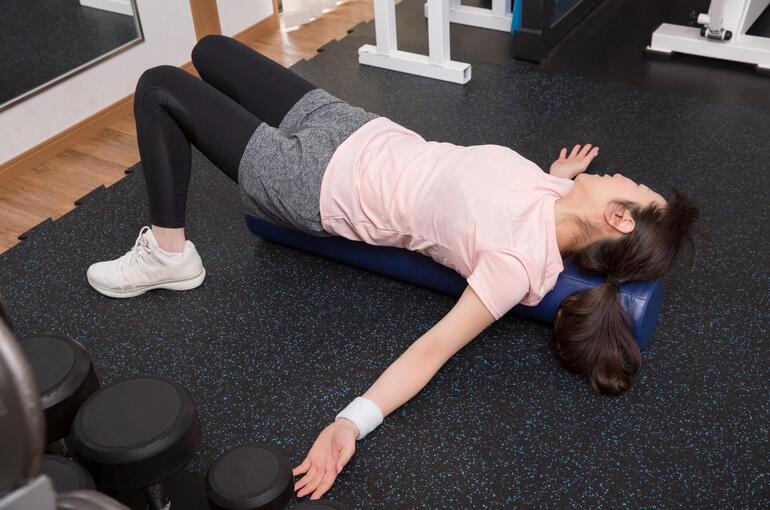
First, one of the most common rehabilitation poles is the stretch pole. This is a type that is used by lying on the ground, and is mainly used to release the muscles around the back, hips, and shoulders. Stretch poles are effective in increasing the stability of the core, and are also ideal for training to develop good posture habits. However, since they are not a walking support device used while standing, they are not suitable for training that involves movement.
Next, walking poles are a pair of support devices used when walking, and are sometimes confused with Nordic poles or trekking poles. Walking poles have a grip that stands upright and is used by placing them perpendicular to the ground, making it easy to walk stably. For everyday walking support for the elderly, there is a tendency to choose poles with anti-slip rubber tips or lightweight aluminum poles.
Nordic poles are designed to be used in a slightly more forward-leaning position than walking poles, and to actively use the muscles of the upper limbs, resulting in a full-body exercise. They are often used under the guidance of a physical therapist, and are specialized for improving balance and strengthening the core. Nordic poles are also designed with a grip shape and straps that fit well, reducing wobbling while walking.
The table below compares the features of each of the most common types of rehabilitation poles.
| name | Main Applications | Features | Suitable user examples | Examples of where to use |
| Stretch pole | Improve posture and release muscles | For use on the floor. Specialized for relaxing muscles in the back and lower back. | Elderly people with back pain and weak core muscles | Indoors (living room, bedroom) |
| Walking poles | Walking stability, fall prevention | It touches the ground vertically. Most of the time, it comes with anti-slip rubber. | Elderly people with mild anxiety when walking | Indoors or outdoors |
| Nordic Poles | Full body exercise, core strengthening | Landing forward also utilizes the core. Ideal for rhythmic exercise. | Hemiplegic people with balance problems | Outdoors, rehabilitation facilities |
| Trekking poles | Outdoor mobility support, leg and back protection | Emphasis on durability. Can also be equipped with spikes | Elderly people exercising in parks or places with many slopes | Outdoors, Parks |
| Half Pole | Sole stimulation, fine muscle control training | Place it on the floor and train your balance. Utilize the unstable structure. | Elderly people who want to train their trunk and foot stability | Indoors (safe place) |
As such, each rehabilitation pole has clear characteristics and is suitable for a certain group of users, and in order to use them effectively, it is necessary to carefully consider the physical condition of the user, the purpose of rehabilitation, and the environment in which they will be used. In recent years, they have become more multifunctional, and some models have been released that allow you to switch from walking poles to Nordic poles by replacing the tip parts.
Since poles are equipment that comes into direct contact with the body, there is a risk of injuring shoulders or elbows or not being able to develop proper posture if you continue to use an unsuitable product, so it is best to select a pole with the advice of an expert, if possible. By choosing the most suitable type based on physical function and goals, the effectiveness of rehabilitation will be significantly improved and motivation to continue will be easier to maintain. It should not be forgotten that choosing the right equipment is a major factor in supporting safe and effective home rehabilitation.
Rehabilitation poles that are suitable for light exercise at home must be lightweight, easy to handle, and easy to store. Many people use them for stretching or simple walking practice in their spare time, so products that are too heavy or have a hard grip are not suitable. The anti-slip rubber tip and height-adjustable structure can be used on both hardwood and carpeted floors, so you can use them with peace of mind. Furthermore, if you can lean it against a wall or fold it up for storage after use, it will be easier to continue using it without taking up space in your living space.
On the other hand, for group training in nursing homes and day care centers, products that take durability and grip sharing into consideration are required. As multiple people may use the equipment, it is ideal to use antibacterial grips and materials that can be easily disinfected with hygiene in mind. In addition, products with a wide range of pole length adjustments and height adjustment with scales to accommodate multiple users of different builds and heights will reduce the burden on staff. It is also important to pay attention to the stability and load-bearing capacity of the installation surface to ensure safety during training.
And when using it specifically for walking assistance, it is essential that the structure of the pole itself is suitable for walking assistance. For this type of pole, which is typified by Nordic poles and walking poles, it is important that the grip is shaped to fit the hand, that the strap can be used to securely hold the pole in place, and that the design ensures safety even when the pole is taken off during use.
Below is a table summarizing the required functions and recommended types for different usage scenarios.
| Usage Scene | Recommended pole type | Main features and required functions | Suitable user examples |
| Light exercise at home | Stretch pole | Lightweight, anti-slip, foldable, quiet design | Seniors who want to train easily at their own pace |
| Group use in facilities | Antibacterial Grip Pole | Wide range of height adjustment, high durability, antibacterial treatment for shared use, and easy-to-disinfect materials | Those who use day care services or functional training facilities |
| Emphasis on walking assistance | Nordic Poles | Comes with a strap, has strong ground contact, shock absorbing design, and an easy-to-grip grip | Those who are worried about walking, those with hemiplegia or reduced lower limb strength |
Also, when selecting a product, it is very important to clarify your body type, how often you will use it, and your purpose.
Poles that do not fit your physique can put undue strain on your body and cause pain in the joints of your knees, shoulders, wrists, etc. In particular, if you have hemiplegia, it is easy for excessive weight to be placed on the non-paralyzed side, so it is best to choose a product that is easy to balance and allows you to fine-tune the length.
The most basic precaution is to always inspect the pole body before use. Wear and deformation of the rubber tip at the tip is an important factor that directly affects slipperiness. If the rubber deteriorates, it will not have enough grip on indoor flooring or outdoor asphalt, and the risk of falling will increase significantly. In addition, it is necessary to regularly check the pole connections for looseness or rattling, and the straps for damage. Getting into the habit of inspecting the pole for a few seconds before use is the first step to safe rehabilitation.
The next important thing is to choose the place to use it. When using indoors, the floor must be flat and non-slip. It is best to avoid places with steps or the borders between carpet and flooring, as these can easily cause tripping. When using outdoors, gravel roads, wet roads, and sloping sidewalks pose a high risk. To ensure safety, it is ideal to use it in areas with good visibility and few obstacles, such as stable paved roads or indoor corridors. It is especially important to refrain from using it after rain or snowfall, as the rubber tip may become slippery.
It is also important to always be aware of not overdoing it when using it. Rehabilitation poles are tools that support the body, but if you place all of your weight on them, not only will they put excessive strain on your arms and shoulders, but they will also increase the risk of you falling if you lose your balance. The correct way to use them is to use them only as an aid to walking and posture, and to walk with a form that is conscious of the central axis of your body. On days when your arms hurt or you are not in top physical condition, not forcing yourself to use them and allowing your body to rest is also part of safety management.
Below is a table outlining the key points for safe use.
| Important points | Content and reason | Recommended Action |
| Pole inspection | Check for wear on the rubber tips and loose grips. Slipping or damage can lead to accidents. | Check visually and manually before use, and if there is any abnormality, replace or discontinue use. |
| Selection of location for use | Places with steps, slippery floors, and obstacles increase the risk of falling. | Choose a flat area with no obstacles, and if you're outdoors, check the road conditions. |
| Selecting a time zone | Your body tends to stiffen up in the mornings and evenings, and the brightness is also lower, making it dangerous. | Training will take place between 10am and 3pm. |
| How to apply force | Putting your entire body weight on it increases the strain on your shoulders and arms, which can lead to a fall. | Use it as if you are lightly touching it. It is used solely to assist balance. |
| Checking your health | When you are tired or your chronic illness worsens, your ability to concentrate decreases, which can lead to accidents. | If you notice any abnormality, stop the exercise without forcing yourself and consult a doctor. |
Additionally, care must be taken when storing rehabilitation poles. To prevent deterioration of the tip, it is essential to store them in an environment that is away from direct sunlight and high temperatures and humidity. Leaving them on the floor can also cause tripping, so it is also important to organize the storage area accordingly, such as by leaning them against a wall, using a special stand, or folding them up for storage.
In this way, by thoroughly understanding the basic rules for safe use and making it a habit, rehabilitation poles become more than just exercise aids; they become important partners supporting daily life. Avoiding self-taught use and having the correct knowledge and awareness are the keys to making daily rehabilitation safe and effective.
Rehabilitation poles have been attracting attention in recent years as an effective tool for elderly people and those with hemiplegia to safely rehabilitate at home. According to statistics from the Ministry of Health, Labor and Welfare, falls among elderly people account for approximately 10% of the causes of needing nursing care, and stabilizing walking and posture is an important issue in maintaining daily life. By using poles to address these issues, it is possible to prevent the decline of the trunk and muscle strength, and to maintain posture and stabilize walking.
For example, Nordic poles are effective for strengthening the core, while stretch poles are suitable for improving posture and relieving muscle tension; choosing the right pole for the right purpose will determine the outcome of rehabilitation.
Rehabilitation is an endeavor that will definitely produce results if you continue. However, using the wrong equipment or overdoing your training can actually hurt your body or prevent you from making it a habit. Choosing and using the right equipment correctly can help you regain confidence in your daily life and be a big step towards extending your healthy lifespan. Why not use this article as a reference and start a safe rehabilitation habit at home?
LAP Corporation has developed and provides the Power Assist Series to support rehabilitation at home for people with hemiplegia due to cerebral infarction or accidents. This series is a robot that uses air pressure to gently move paralyzed joints in the fingers, ankles, and wrists to assist rehabilitation training. It can be easily used at home, enabling continuous rehabilitation. The product lineup includes the Power Assist Hand for fingers, the Power Assist Leg for ankles, and the Power Assist Wrist for wrists, and is compatible with the rehabilitation of each part of the body. Through these rehabilitation assistance robots, we will contribute to the recovery of function and improvement of the quality of life of everyone.
Q. Are there any guidelines for size and length that I should check when purchasing?
A. The length of the rehabilitation pole depends on the user's height and posture. If it is an adjustable type, it is very convenient because you can set it to the height that suits you. The grip position should be kept horizontal with the angle of your elbow as a guideline. If you cannot adjust the length, it is important to consult the shop or choose a product that matches your height and corresponding size.
Q. Are there any places or environments I should be careful of when using it at home?
A. On slippery floors or in places with steps, the pole's contact with the ground becomes unstable and the risk of falling increases, so care must be taken. It is safe to choose a type with non-slip rubber or a type with a firm grip, and to use it in a space with few obstacles, such as next to a bed or in a hallway. Tidying up the surroundings before use will make training even safer.
Q. What is the difference between a rehabilitation pole and a walking stick?
A. A walking stick is a welfare product intended to assist walking and is used to support the body, while a rehabilitation pole is an exercise product designed primarily for training, improving posture, and strengthening balance. Because their uses are different, poles with functions that are conscious of exercise and training are made of special materials and have innovative contact with the ground, and are classified differently from nursing care products. It is important to choose one that suits your purpose.
Company name: LAP Co., Ltd.
Location: 2-1-40 Oikawa, Atsugi City, Kanagawa Prefecture, 243-0212
Telephone number: 046-204-9343


|
|
046-204-9343 9: 00-17: 00
|
|
local_phone TEL |
contact_mail お問い合わせ |
スマホ決済がご利用頂けます。
ご希望の決済方法をお選びください。

キャッシュレス決済がご利用頂けます。
お支払い方法は各サービスのご利用方法に準じます。
※ご新規で電子決済サービスをご希望の方はアプリケーションストアよりダウンロードしてください。
