
A Complete Guide to Choosing a Rehabilitation Hospital or Facility in Kanagawa Prefecture: Costs ...
query_builder
2025/10/30
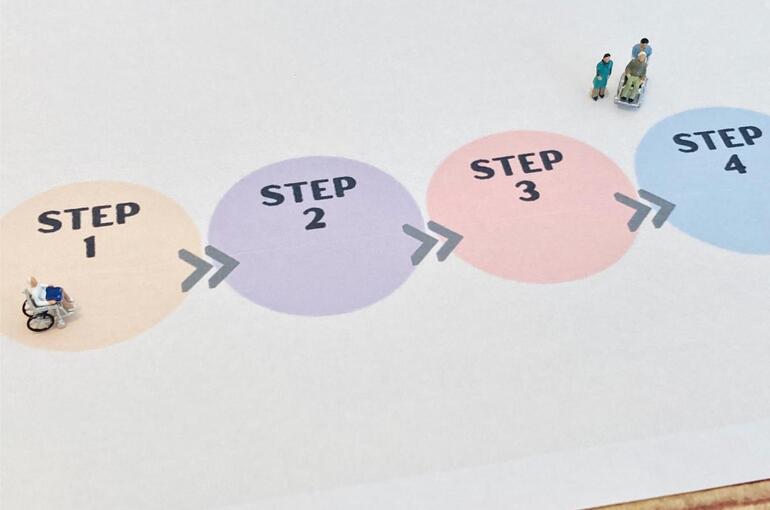
Are you unsure of how to stage your rehabilitation and just going through the training without really thinking about it?
"Are the current movements really effective?" "Are the assessments and tasks set to suit the patient?" - there are many occupational therapists and their families who have such concerns. In fact, incorrect setting of steps can prevent independent support from happening.
Facilities that implement a gradual rehabilitation process have achieved clear results in terms of improvement rates in ADL (activities of daily living) compared to others, and grading is seen as an important factor that is directly linked to recovery.
This article provides a detailed explanation of evidence-based training techniques, including examples of how they are used in the field.
The meaning of staging, how to design without failure, and ideas for maximizing the rehabilitation effect can surely be put to use in your own work environment.
LAP Corporation has developed and provides the Power Assist Series to support rehabilitation at home for people with hemiplegia due to cerebral infarction or accidents. This series is a robot that uses air pressure to gently move paralyzed joints in the fingers, ankles, and wrists to assist rehabilitation training. It can be easily used at home, enabling continuous rehabilitation. The product lineup includes the Power Assist Hand for fingers, the Power Assist Leg for ankles, and the Power Assist Wrist for wrists, and is compatible with the rehabilitation of each part of the body. Through these rehabilitation assistance robots, we will contribute to the recovery of function and improvement of the quality of life of everyone.
Explaining the definition and meaning of grading
The term "staging" is frequently used in the fields of medicine, nursing care, and rehabilitation, but there is a big difference between its general meaning and how it is used in clinical practice. In everyday life, "staging" means to organize things in an orderly manner, but in the field of rehabilitation, it is an essential concept for setting goals according to the patient's condition, adjusting training content, and checking progress.
Staging is a practical framework that divides the rehabilitation evaluation, training, and planning into phases according to the physical, mental, and functional status of the patient, and leads them to achieve their goals without difficulty. Specifically, it incorporates the following elements:
Basic structure of staging in the rehabilitation field
| Stage Name | Main Objective | Evaluation perspective | Main training contents |
| Acute | Rest and life support | Vital signs stable, resting | Preventing joint contracture, sitting posture training |
| Recovery period | Reacquiring basic movements | Strength and balance assessment | Standing, walking, transferring, and eating training |
| Maintenance and living stage | Support for independent living | ADL independence, range of living | Toilet, cleaning, shopping practice |
In this way, grading is not just a way to "sort" or "prioritize," but is the basis for all decisions, including training plans, support policies, and family guidance. Because of grading, "what can be done in the current state," "the next function to aim for," and "the training methods required for that" are logically organized, and on-site decisions and guidance are consistent.
The ICF (International Classification of Functioning, Disability and Health) perspective is also essential for staging. In the ICF, the subject must be evaluated according to factors such as "mental and physical functions and structures," "activity," and "participation," and appropriate intervention must be provided. Staging is based on this ICF perspective and is also a "translation" that seamlessly connects evaluation to implementation.
Furthermore, the grading system also makes it easier to share information not only with therapists, but also with caregivers and family members. By sharing specific information such as "We are now in the latter half of the recovery period and have stabilized in standing, so next we will begin mobility training," rather than using vague expressions such as "I can't do it yet" or "We will wait and see," everyone can easily understand the significance and necessity of the training.
The risks of inappropriate staging
If rehabilitation staging is designed correctly, it can be a compass for the patient's recovery, but on the other hand, incorrect staging can cause serious problems. The most common cases are "overload," "setting goals that are difficult to achieve," and "goals that are vague and impossible to evaluate."
For example, forcing walking training on a patient without muscle strength or range of motion has the potential to lead to falls or the recurrence of pain. Furthermore, moving on to housework or shopping training when ADL ability is still low can lead to the patient feeling frustrated or even losing motivation to continue training.
Main risks of improper staging
| Risk details | Examples | Likely effects |
| Overload | Stair climbing training for patients with unstable balance | Falls, pain, fear |
| Setting unattainable goals | Forced to eat with chopsticks during early recovery period of hemiplegia | Loss of confidence and motivation for rehabilitation |
| Skipping steps | Transition to walking training without standing training | Gait instability, need for retraining |
| Ambiguous milestones | The training goal is simply stated as "to be able to live." | Difficulty in evaluation, problems with handover between therapists |
Furthermore, mistakes in the design of the stages can lead to mistakes in coordination not only with therapists, but also with caregivers and families. Common cases in the field include "changes in the method of care have not been shared" and "the environment has not been improved to match the progress." This is a typical case where the quality of the overall support is scattered when the stages are unclear.
With a precise step-by-step plan, for example, "the patient can eat on their own, but supervision is only required when moving around," or "full assistance with toileting is required only in the morning," the caregiver can clearly understand their role, and the patient can concentrate on rehabilitation without confusion.
What to do during the "acute" phase of rehabilitation
The "acute phase," the initial stage of rehabilitation, is a medical phase that is administered immediately after the onset of illness or injury, primarily during hospitalization. This applies to patients with strokes, spinal cord injuries, traumatic fractures, and those immediately after surgery, and is a period in which maintaining life and preventing complications are given top priority. Training and intervention during this period serve to avoid complications by getting patients out of bed early, and to build a foundation for progressing to the next stage as quickly as possible.
During the acute phase, there is a high risk of developing conditions such as joint contractures, muscle atrophy, aspiration pneumonia, deep vein thrombosis, and bedsores, so simply resting is not always safe. Under the doctor's instructions, and while thoroughly managing risks, support is required to keep the body moving, even if only to a minimum.
The specific training content and objectives are as follows:
| the purpose | Main training and support provided |
| Maintaining range of motion | Passive joint movement (ROM movement) and active movement instruction in bed |
| Preventing muscle weakness and disuse syndrome | Isometric contraction training, sitting position training |
| Improved respiratory function | Respiratory rehabilitation (deep breathing, coughing exercises, pursed lip breathing) |
| Promoting early mobility | Sitting position training, standing up training, transferring from bed |
| Assessment and stimulation of consciousness and cognitive level | Observation of alertness, stimulation input, and reactivity training |
Training time is generally short-term intervention of about 20 to 30 minutes per day, but this is the result of prioritizing medical safety. Rather than increasing the amount of training, it is considered more important to "regularly evaluate and manage physical condition," and a flexible attitude is required to change the training content according to the condition.
In addition, during the acute phase, the patient's ability to understand is often reduced, so collaboration with multiple professions, including family members and nurses, is essential. For example, adjusting the living environment, such as properly positioning the patient after training and arranging cushions to support the joints, is also an important factor in improving the effectiveness of training.
What kind of training is emphasized during the "recovery period"?
The recovery period is the phase in which patients are no longer in danger of losing their life and begin to fully recover their functions. In the case of cerebrovascular disease, recovery begins approximately one month after the onset of the disease, and in the case of orthopedic disease, recovery begins 10 to 2 weeks after surgery. The main goal is to increase independence through the acquisition of activities of daily living (ADL) and to return to home and society.
During this period, the volume, frequency, and variety of training is at its highest. In rehabilitation wards designated by the Ministry of Health, Labor, and Welfare, rehabilitation training is possible for up to three hours per day, with physical therapy, occupational therapy, and speech-language-hearing therapy working together in a planned manner.
The main training contents are as follows:
| Field | Training Content | Tools and methods used |
| Basic movement training | Training to get up, sit, stand and walk | Parallel bars, walking sticks, leg braces |
| ADL training | Training in toileting, dressing, eating, grooming, bathing, etc. | Western-style toilet seat, clothing aids, environmental settings |
| Upper limb and finger training | Grip strength training, object grasping, work imitation training | Acrylic cone, clothespins, workbench |
| Cognitive rehabilitation | Memory, attention and judgment training | Calendar training, language stimulation, memory games |
| Eating and swallowing training | Improved swallowing and chewing safety | Swallowing exercises, viscosity adjustment, positioning |
The defining feature of this stage is that it focuses on "staged training design." In other words, it clarifies what the patient can currently do and what they should be able to do next, and uses task practice or CI therapy that matches the current state to gradually improve function.
Necessary support during the maintenance and daily living stages
The maintenance and daily living stage is when intensive rehabilitation training comes to an end and the focus shifts to life at home and in the community. In this phase, the focus is on "maintenance" and "utilization" rather than on improving function, and on "improving quality of life." Assuming life at home after discharge, important themes include preventing recurrence, reducing the need for assistance, and supporting independence.
During the maintenance phase, the training location shifts from hospitals to home rehabilitation, day care, local rehabilitation centers, etc. Below is a summary of the main support provided during the living phase.
| Support Areas | the purpose | Contents |
| Maintaining bodily functions | Preventing loss of muscle strength, flexibility, and range of motion | Self-training, walking instruction, exercise programs |
| Maintaining and expanding ADL | Maintaining independence and reducing the burden of daily life | Repetitive training in daily life tasks such as toileting, grooming, cooking, and shopping |
| Environmental Adjustments | Prevent falls and accidents, improve work efficiency | Eliminating steps, installing handrails, and reviewing the placement of tools |
| Social Participation Support | Preventing isolation and improving mental satisfaction | Day care services, hobby activities, and promoting family interaction |
| Family Support | Improving the quality of care and reducing the burden | Guidance on how to assist and suggestions on how to utilize nursing care insurance services |
At this stage, the perspectives of "activity" and "participation" are important. In terms of the ICF, support is required not just for "physical function," but also for activities of daily living (ADL), role-playing activities (IADL), and even community interaction.
What is Task Practice?
Task practice is a type of repetitive task training used in rehabilitation, which encourages the brain and neural circuits to relearn specific movements or functions over and over again, leading to functional recovery. It has been scientifically proven that repetitive practice activates neuroplasticity, making it easier to form compensatory circuits in damaged areas of the brain.
Task Practice is carried out in the following process:
This type of training is considered particularly effective for upper limb paralysis, ataxia, and reduced dexterity after a stroke, and is widely used in rehabilitation facilities both in Japan and abroad.
Key features and benefits of Task Practice
| item | Contents |
| Target Action | Part or all of daily activities (eating, dressing, grooming, laundry, etc.) |
| Level of the target audience | Those with moderate to mild paralysis and preserved cognitive function |
| Number and frequency | 200-600 repetitions per day is recommended (adjust according to fatigue level) |
| Tools used | Acrylic cones, mugs, clothespins, building blocks, work boards, etc. |
| How to evaluate the results | FIM score, grip strength measurement, range of motion, movement speed, etc. |
The greatest strength of Task Practice is that it is based on real-life movements. For example, because it involves repeating specific actions such as holding a teacup to one's mouth or hanging clothes on a hanger, it is highly reproducible in real life, and the results of the training can be easily applied to everyday life.
Problem-oriented approach in practice
The Task Oriented Approach is a practical rehabilitation method that aims to simultaneously improve physical function and activities of daily living (ADL) through tasks that mimic actual daily activities. This approach is based on the principle of neurorehabilitation that "purposeful movements" are the most effective for motor learning in the brain and body, and has been highly evaluated in the field of rehabilitation in recent years.
This method focuses not on simple muscle training or increasing the range of motion of joints, but on "actions" that are directly related to the patient's daily life. For example, everyday tasks such as "hanging out the laundry," "eating with chopsticks," and "opening your wallet to pay" are reproduced as training content.
Problem-oriented approach in practice
| Example of the problem | Required operating elements | Equipment and environment |
| Hanging out the laundry | Shoulder elevation, elbow extension, finger grasping, balance maintenance | Clothespins, clothes drying rack, towels |
| Eat with chopsticks | Finger dexterity, forearm supination, vision and coordination | Tableware, chopsticks, and food for training |
| Folding clothes | Palmar motor control, bimanual coordination, trunk stability | Towels, shirts, bed or desk surfaces |
| take coins out of one's wallet | Grasping and releasing of fingers, visual perception, attention | Wallet, mock coin, desk |
| Twist the doorknob | Wrist supination/pronation, grip strength, force control | Training knob, wall mounting stand |
These tasks are graded according to the patient's level based on the evaluation, and the difficulty of the tasks is changed as the patient progresses. For example, training in hanging laundry can be applied in stages, such as "from pin-type clothespins to clothespins with a strong spring" or "from sitting in a chair to standing."
Successful task-oriented rehabilitation requires an accurate understanding of the patient's needs and lifestyle, and the ability to reflect this in the tasks. The essence of the task-oriented approach is rehabilitation that contributes to the reconstruction of a "life that is unique to each individual," rather than general tasks.
Staging rehabilitation is not as simple as simply progressing through training in order. It is necessary to design optimal training methods and support content for each stage according to the condition and living environment of each individual patient, and the goals of ADL (activities of daily living). In particular, approaches such as Task Practice, CI therapy, and preshaping are important techniques that greatly affect the speed and quality of functional recovery.
In fact, reports from the Ministry of Health, Labor and Welfare and the Japan Occupational Therapists Association show that in facilities where a gradual training plan is in place, the independence and motor functions of users are significantly improved. If the grading is done appropriately, patients themselves are more likely to feel that they are "able to do more," which helps maintain their motivation for rehabilitation.
On the other hand, if the stage design is incorrect, the training may become painful and may lead to withdrawal or functional decline. If you feel that "there is no progress in movement" or "the training is not suitable for the person," it is necessary to review the stage. It is important to be aware that staging is not just a progress chart, but a dynamic process of repeated evaluation and adjustment.
The methods and ideas introduced in this article are effective not only for occupational therapists, but also for family members and care managers involved in home care. By correctly understanding the step-by-step approach and applying it to daily training, the quality of life (QOL) of users will definitely improve. From among the many rehabilitation methods available, it is important to select a scientifically based staging. This is the essence of the support that is needed now.
LAP Corporation has developed and provides the Power Assist Series to support rehabilitation at home for people with hemiplegia due to cerebral infarction or accidents. This series is a robot that uses air pressure to gently move paralyzed joints in the fingers, ankles, and wrists to assist rehabilitation training. It can be easily used at home, enabling continuous rehabilitation. The product lineup includes the Power Assist Hand for fingers, the Power Assist Leg for ankles, and the Power Assist Wrist for wrists, and is compatible with the rehabilitation of each part of the body. Through these rehabilitation assistance robots, we will contribute to the recovery of function and improvement of the quality of life of everyone.
Q. How long does it actually take for the rehabilitation staging to have an effect?
A. The period in which effects appear depends on the patient's illness and ADL status, but the standard rehabilitation process from the acute phase to the daily living phase takes approximately 3 to 6 months. In training that applies Task Practice to daily life, there have been cases where the accuracy of movements has improved in about 2 weeks, and by setting up proper training in stages, it is possible to speed up the improvement of function and independence.
Q. What are the consequences of incorrect staging? Do you have any concrete examples?
A. Inappropriate staging carries the risk of causing mental frustration for patients (due to muscle weakness and progression of joint contracture due to overload). For example, if the ADL assessment is incorrect and training is set prior to the physical ability of the patient, the patient may fail to perform self-help movements and have a negative reaction to the training. As a result, it has been reported that it becomes difficult to continue training, which ultimately leads to a decline in daily life functions and an increase in the amount of care required. Accurate assessment of staging and judgment based on the occupational therapist's experience are essential.
Company name: LAP Co., Ltd.
Location: 2-1-40 Oikawa, Atsugi City, Kanagawa Prefecture, 243-0212
Telephone number: 046-204-9343


|
|
046-204-9343 9: 00-17: 00
|
|
local_phone TEL |
contact_mail お問い合わせ |
スマホ決済がご利用頂けます。
ご希望の決済方法をお選びください。

キャッシュレス決済がご利用頂けます。
お支払い方法は各サービスのご利用方法に準じます。
※ご新規で電子決済サービスをご希望の方はアプリケーションストアよりダウンロードしてください。
