
A Complete Guide to Choosing a Rehabilitation Hospital or Facility in Kanagawa Prefecture: Costs ...
query_builder
2025/10/30
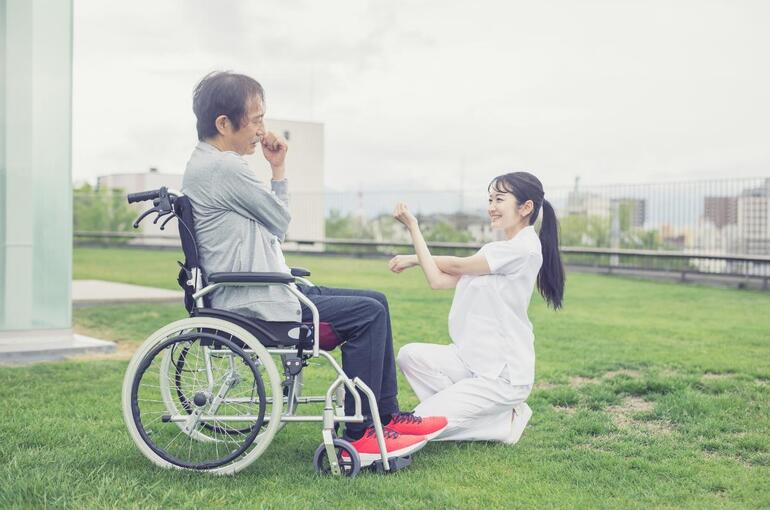
Do you have poor shoulder joint movement and feel pain even with small everyday movements? For those with aftereffects of a stroke, frozen shoulder, or hemiplegia, maintaining upper limb movement and joint range of motion is a serious challenge. Do you have concerns or questions like, "I feel like my muscles are getting stiff," or "I don't know where to start with occupational therapy?"
In recent years, rehabilitation methods that can be done at home have been attracting attention in Japan, and among them, towel wiping is highly regarded as an effective form of exercise therapy that does not put excessive strain on the joints. It is also widely used in occupational therapy, and since it naturally brings out flexibility in the elbow joint and abduction movement, it is easy to continue, and there are an increasing number of cases where families are involved in the therapy.
This article will help make your rehabilitation feel more "doable" by teaching you how to slowly regain the muscles and sense of direction you need to move every day while avoiding pain.
LAP Corporation has developed and provides the Power Assist Series to support rehabilitation at home for people with hemiplegia due to cerebral infarction or accidents. This series is a robot that uses air pressure to gently move paralyzed joints in the fingers, ankles, and wrists to assist rehabilitation training. It can be easily used at home, enabling continuous rehabilitation. The product lineup includes the Power Assist Hand for fingers, the Power Assist Leg for ankles, and the Power Assist Wrist for wrists, and is compatible with the rehabilitation of each part of the body. Through these rehabilitation assistance robots, we will contribute to the recovery of function and improvement of the quality of life of everyone.
| LAP Co., Ltd. | |
|---|---|
| address | 2-1-40 Oikawa, Atsugi City, Kanagawa Prefecture, 243-0212 |
| phone | 046-204-9343 |
Accurate evaluation and assessment are important in wiping rehabilitation. The seemingly simple movement of sliding a towel actually involves complex interactions of trunk stability, joint coordination, and cognitive function. Evaluations are performed at each stage of the movement, and clarifying the issues leads to an appropriate training plan.
Graded evaluation points
The movement is observed in three stages: start, middle, and end.
| step | Observations | the purpose |
| Start time | Sitting position, trunk stability, towel grip, spatial awareness | Check your posture and readiness |
| Working | Smooth upper limb movement, uniformity of movement, sitting balance | Assessment of motor coordination and support |
| End Time | Appearance of fatigue, naturalness of ending movement, return of weight transfer | Cognitive and physical load check |
Specific observation items and evaluation criteria
| Observation items | Evaluation points | Judgment criteria |
| Posture maintenance | Pelvic and trunk stability | Can the sitting position be maintained without collapsing? |
| Upper limb coordination | Shoulder, elbow and wrist joint coordination | Is it operating smoothly? |
| Towel handling | Linearity and range of the trajectory | Can it be operated without bias? |
| Fatigue and Caution | Concentration and duration | Are you getting tired in a short time? |
Perspectives on hemiplegia and flaccid paralysis
In hemiplegia, the recovery stage is grasped using the Brunnstrom stage (Brs), and attention must be paid to the emergence of compensatory movements, especially in Brs1 to 3. Movement is possible from Brs4 onwards, but there are still issues with coordination and smoothness. In flaccid paralysis, the main problems are decreased muscle tone and unstable support, and evaluation focuses on "continuity of movement" and "repetitiveness" rather than "muscle strength".
| Evaluation items | Contents | Evaluation focus |
| Brs Stage | Hemiplegia recovery classification | Presence and quality of voluntary movement |
| Muscle tone | Tendency to relax and contract | Tone variation |
| Attitude control | Trunk and shoulder girdle support | Balance stability |
Range of motion and balance assessment practice
We check the range of motion (ROM) of the shoulders, elbows, and wrists, which are involved in the smoothness of movement, as well as the trunk's ability to maintain a sitting position. These evaluations are essential for analyzing how joint movement restrictions and poor posture affect towel manipulation.
| Evaluation area | Evaluation Content | Observation points |
| Shoulder joint | Flexion, abduction, and rotation | Reaching the other side and presence or absence of pain |
| Elbow joint | Smoothness of bending and stretching | Continuous motion at a constant speed |
| Core | Sitting position maintenance/left and right tilt | Shifting center of gravity and compensatory movements |
When assessing wiping movements, multifaceted perspectives are required, including not only musculoskeletal mobility but also posture balance, cognitive load, and repetitiveness of movements. The results of the assessment are reflected in the rehabilitation plan and directly linked to individual support content and environmental settings (adjustment of desk height, selection of support tools). This allows for more practical support for improving ADL.
Towel wiping training for beginners
Towel wiping rehabilitation is one of the exercise therapies that can be easily done at home for various cases such as stroke, shoulder joint contracture, and decreased upper limb function. The biggest advantage, especially for beginners and elderly people who have just started rehabilitation, is that it is easy to incorporate into daily life without using any training equipment.
The most important thing when starting training is to ensure a safe posture. The basic posture is to sit deep in a chair with the pelvis firmly upright and the soles of the feet firmly on the floor. Adjust the desk height so that you can keep your elbows slightly bent and your back comfortably straight, which will help distribute the strain on your shoulder joints, elbow joints, and wrist joints.
At the start of the movement, lightly grasp the towel with both hands and place it in the center of the desk. From there, slide it from side to side and back and forth. The key point is to be careful not to raise your shoulders and to be aware of the proper movement of your shoulder blades. Also, by not overextending your elbows during the movement, you can prevent excessive tension in your elbow joints and forearm muscles.
Below is an example of a towel wiping training menu recommended for beginners.
| Menu Name | Operating Direction | Estimated number of times | Main Objective |
| Lateral Wiping | Slide left and right | 10-15 repetitions x 2 sets | Emphasis on shoulder abduction and adduction and trunk rotation |
| Vertical Wiping | Slide back and forth | 10-15 repetitions x 2 sets | Coordinated shoulder flexion and extension training |
| Circular Wiping | Move in a circular motion | 5 laps in each direction x 2 sets | Increased range of motion and smoothness of the shoulder girdle |
| Cross Wiping | Slide diagonally | 10 repetitions in each direction x 2 sets | Complex motor control and attention |
To make it a habit, it is effective to fix it to a time in your daily life that is easy to incorporate (after breakfast, before bathing, etc.). Also, if you experience pain or discomfort, do not force yourself to continue, but stop temporarily and consult a specialist.
In order to sustain the effects of training, it is effective to "split the training into several sessions throughout the day, doing it in small increments." Rather than continuing for a long period of time, "continuity" and "accuracy" are more important for functional recovery. For elderly people, it is ideal to concentrate on one movement and complete it in a short period of time to avoid cognitive fatigue.
In addition, when starting training, we recommend cooperation from family members and having a visiting rehabilitation instructor check the training. In particular, for people with hemiplegia or flaccid paralysis, even if they appear to be able to move, muscle tension or impaired sense of direction may affect the quality of their movements, so feedback from a third party is effective.
Acrylic cones and applied training menu for advanced users
For those who have made wiping rehabilitation at home a habit and have stabilized their movements to a certain extent, we can introduce more difficult applied training using acrylic cones and alternative tools to further improve upper limb function.
An acrylic cone is a cone-shaped transparent plastic device that can be used as a target to improve visual-motor coordination. It is effective in improving attention and motor accuracy by adding the cognitive element of "moving your hand accurately along a target" to the action of wiping a desk with a wiping towel or cloth.
The following applied training menu is possible:
| Menu Name | Tools used | Contents | Main training effects |
| Cone Contact Wiping | Acrylic Cone | Slide the towel over the cone placed in the designated position. | Hand-eye coordination, upper limb reaching ability |
| Target moving wiping | Color mark sheet | Specify wiping direction for each color | Cognitive function, judgment, and visual processing |
| Timed Rally | Timer App | Compete to see how many times you can travel back and forth within a certain time | Repetition, concentration, and speed adjustment |
If you don't have an acrylic cone, you can use a colored cone or a paper cup that you can buy at a 100-yen shop instead. What's important is the structure of the movement, which is to "keep a clear target in mind while moving," and it's more important to clarify the training content and its purpose than the material of the equipment.
One thing to be careful of when training is that excessive force or awkward postures can be used in an effort to achieve precision in movement, so it is safe to always check your posture in a mirror or have a third party observe you. In particular, people with hemiplegia are prone to compensatory movements due to strong muscle tension, and they may end up using force when abducting the shoulder joint or rotating the trunk, so caution is required.
In addition, when stepping up training, it is advisable to proceed in the following three stages.
Gradual load adjustment not only maintains and improves function, but also increases self-efficacy.
Wiping for frozen shoulder (combined with Codman exercises)
Frozen shoulder (periarthritis of the shoulder) is a common symptom seen in adults over 40 years old, and when it is accompanied by contracture, it has a large impact on daily life, so appropriate exercise therapy is required from an early stage. In particular, self-training using wiping movements is highly regarded as an effective means of gradually increasing the range of motion of the shoulder joint while avoiding pain.
To perform wiping safely and effectively, it is first necessary to create a posture that matches the direction of shoulder joint movement and the restricted area of the joint capsule. Smooth movements on the desk using a towel naturally bring out movements such as abduction, flexion, and horizontal abduction, and it is important to prevent excessive strain on muscles and joints.
Especially in the early stages of rehabilitation, it is necessary to achieve the goal of "moving the joint" while avoiding weight on the shoulder, so it is recommended to use Codman exercises (pendulum exercises) in combination. Codman exercises are a method of moving the shoulder joint with a natural pendulum movement without tensing the muscles around the shoulder blade, and are easy to perform even for those with severe range of motion restrictions.
Combining wiping with Codman exercises using the steps below can be effective in improving function.
| Steps | method | point |
| 1 | Codman Exercise (Front, Back, Left and Right) | Use the weight of your arm to swing naturally. Avoid swinging in any direction that causes pain. |
| 2 | Towel wiping (vertical direction) | Be aware of shoulder flexion and move smoothly. |
| 3 | Towel wiping (circular motion) | Be aware of moving the entire joint capsule. The range of motion can be adjusted without strain. |
| 4 | Take a deep breath while wiping | It suppresses muscle tension and induces natural movements. |
By progressing in stages like this, you can avoid defensive contractions caused by pain and safely expand the range of motion of your joints. One thing to note is that it is important to thoroughly control your posture so that you do not shrug your shoulders or tilt your trunk as a compensation during the movement. The ideal course of action is to start under the guidance of a rehabilitation professional and then practice at home once you have become accustomed to the movement.
Frozen shoulder may heal naturally, but if contracture remains, it can significantly limit activities of daily living, such as putting on and taking off clothes or tying your hair, so incorporating simple, sustainable exercises such as wiping is very effective.
Wiping to reduce the burden on the elderly
For the elderly, rehabilitation that can be easily incorporated into their daily lives is directly linked to ensuring continuity. Wiping movements are ideal for the elderly, as they require little equipment and space, and can be performed with a light load. However, as muscle mass and flexibility of joints and ligaments decrease with age, careful attention must be paid to the selection of equipment and the maintenance of the exercise environment.
First, when selecting equipment, use towels or cloths that slide easily, and avoid materials that are too slippery. Also, adjust the height of the desk or table so that your forearms can rest naturally when you bend your elbows slightly at 90 degrees. It is preferable to use a chair that is stable and has a seat that is not too low.
Below is a table summarizing some ideas that seniors can take with peace of mind.
| item | Details of the innovation | Commentary |
| Tool selection | Uses large soft cloth | Less resistance, less interference with operation |
| Environmental Improvement | Place a non-slip sheet on the desk | Prevents towels from moving around too much |
| Posture maintenance | Adjust the cushion to keep your pelvis upright | Improved stability in the sitting position |
| Movement amount adjustment | Start with 5 repetitions per set | Allow yourself to finish before you feel fatigued |
| Caregiver support | Support for voice and actions | Creating an environment where employees can continue with confidence |
When performing wiping, it is important to focus on the quality of the movement. Rather than doing it many times, it is more effective to perform each movement carefully and with concentration. Also, if you are worried about maintaining your posture, using a backrest or cushion for support can help reduce falls and strain.
Furthermore, if a caregiver is nearby, it is important to provide support that respects the individual's independence by only providing assistance by "holding their hands." This will give the individual a sense of accomplishment by being able to do it on their own, and will increase their motivation for the next training session.
Rehabilitation for the elderly is an important element that not only restores function, but also helps maintain quality of life and prevents isolation. Wiping is an effective way to create an opportunity for this, and it is necessary to create a safe, secure, and sustainable training environment while respecting the individual's wishes.
Wiping rehabilitation is one of the least stressful exercise therapies for those suffering from frozen shoulder, hemiplegia, and the decline of upper limb function in the elderly. In particular, tabletop exercises using towels and acrylic cones are effective in restoring flexibility and coordination to the shoulder, elbow, and wrist joints without putting excessive strain on the joints. It is now attracting attention because the content practiced by rehabilitation professionals in clinical settings can be applied at home.
For example, for frozen shoulder, a combination of Codman exercises and wiping movements can be expected to alleviate contracture and reduce pain. For hemiplegic patients, a step-by-step training menu according to the Brunnstrom stage and an approach incorporating visual and sensory feedback are effective. Furthermore, for elderly people, it is important to create an environment where they can continue safely by selecting the right equipment, adjusting their posture, and devising ways of assistance.
Many people worry, "I'm not sure if I can do it," or "How effective will it be?" However, by starting with a short period of time under the guidance of an occupational therapist, you can expect to see good results. In fact, many people who have incorporated it into their self-training at home report that their independence in daily activities has increased.
In rehabilitation, continuity produces the greatest effect. Wiping movements, which can be done within reasonable limits, are the perfect first step. If you are unsure of how to improve your condition, start with simple movements that can be done with tools you have around the house. If you leave it unattended, your muscle strength and range of motion will decrease, and your risk of becoming dependent on care in the future will increase. Taking action, even if it is just a little at a time, can make a big difference to your future body.
LAP Corporation has developed and provides the Power Assist Series to support rehabilitation at home for people with hemiplegia due to cerebral infarction or accidents. This series is a robot that uses air pressure to gently move paralyzed joints in the fingers, ankles, and wrists to assist rehabilitation training. It can be easily used at home, enabling continuous rehabilitation. The product lineup includes the Power Assist Hand for fingers, the Power Assist Leg for ankles, and the Power Assist Wrist for wrists, and is compatible with the rehabilitation of each part of the body. Through these rehabilitation assistance robots, we will contribute to the recovery of function and improvement of the quality of life of everyone.
| LAP Co., Ltd. | |
|---|---|
| address | 2-1-40 Oikawa, Atsugi City, Kanagawa Prefecture, 243-0212 |
| phone | 046-204-9343 |
Q. Is wiping really possible even with hemiplegia? At what stage in the BRS system can I start?
A. Yes, wiping rehabilitation can be performed at each stage of Brunnstrom stages 1 to 6, even for hemiplegic patients. At stages Brs1 and 2, you start with passively sliding a towel, and at stages Brs3 and above, you can spontaneously perform vertical and diagonal movements as voluntary movement recovers. In particular, at stages Brs4 to 6, applied training to improve the coordination of muscles and upper limbs becomes important, and the use of acrylic cones and other tools makes it possible to improve motor accuracy. Evaluation by professionals and the creation of a stage-specific menu are the keys to effective recovery.
Q.What is the difference between wiping and sanding? Are there any criteria for choosing between them?
A. Both wiping and sanding are typical exercises used in occupational therapy, but there are clear differences in their purpose and the way they apply stress. Wiping is an exercise that improves the sense of direction and posture balance while comfortably expanding the range of motion of the shoulder and elbow joints by sliding a towel or other object. On the other hand, sanding involves a certain amount of resistance and is an exercise that puts more force into the muscles and joints, so it is intended to strengthen the muscles of the upper limbs and shoulder girdle. For the elderly and those with flaccid paralysis, it is safe and effective to start with wiping.
Q. Are there any key points to wiping rehabilitation that even elderly people can continue safely?
A. For elderly people to safely continue wiping rehabilitation, it is important to reduce the load of movement and adjust the environment. For example, it is essential to ensure that the towel slides smoothly by adjusting the height of the desk and the stability of the chair so as not to put an unnatural angle on the elbow and shoulder joints. In addition, it is also effective to use anti-slip sheets or towels with rubber bands if the grip strength of the fingers is weak. In fact, there have been cases where the facility performed the wiping two to three times a week and shoulder movement improved after six months. A design that allows for continuity and the support of the caregiver are directly linked to results.
Company name: LAP Co., Ltd.
Location: 2-1-40 Oikawa, Atsugi City, Kanagawa Prefecture, 243-0212
Telephone number: 046-204-9343


|
|
046-204-9343 9: 00-17: 00
|
|
local_phone TEL |
contact_mail お問い合わせ |
スマホ決済がご利用頂けます。
ご希望の決済方法をお選びください。

キャッシュレス決済がご利用頂けます。
お支払い方法は各サービスのご利用方法に準じます。
※ご新規で電子決済サービスをご希望の方はアプリケーションストアよりダウンロードしてください。
