
A Complete Guide to Choosing a Rehabilitation Hospital or Facility in Kanagawa Prefecture: Costs ...
query_builder
2025/10/30
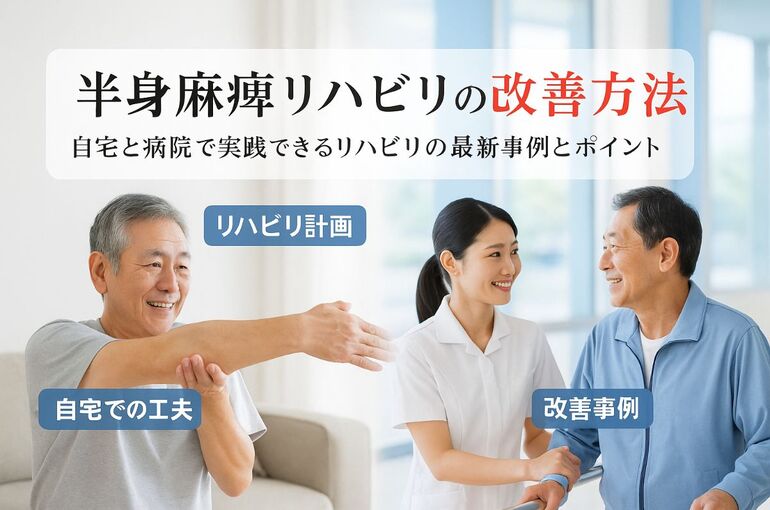
For those concerned about hemiplegia rehabilitation. Hemiplegia caused by stroke, cerebral infarction, cerebral hemorrhage, etc. is considered to have a major turning point in recovery approximately six months after onset, and early rehabilitation intervention is directly linked to functional recovery. However, do you have questions or concerns such as, "What kind of rehabilitation is effective?" or "Are there any methods I can use at home to improve my condition?"
Many patients are faced with motor paralysis and sensory impairments, which affect their daily lives, and are often unsure of how much walking and limb movement will return, and how long and expensive rehabilitation will be. In fact, proper training, physical therapy, and the use of the latest equipment and self-training goods can make a big difference in the speed and results of recovery.
This article provides an easy-to-understand explanation of the overall picture and specific methods of hemiplegia rehabilitation based on the latest developments and scientific evidence, with examples from medical institutions and first-hand experiences. It also thoroughly covers tips for walking, hand, and muscle training that can be practiced at home, as well as cutting-edge rehabilitation methods available in hospitals .
If you don't want to make a bad choice in your rehabilitation and want to get your life back as quickly as possible, please read on. We will listen to your challenges and provide you with the best tips for improvement.
LAP Corporation has developed and offers the Power Assist Series to support home rehabilitation for people with hemiplegia due to stroke, accidents, and other conditions. This series uses air pressure to gently move paralyzed finger, ankle, and wrist joints, assisting rehabilitation training. It can be easily used at home, enabling continuous rehabilitation. The product lineup includes the Power Assist Hand for fingers, the Power Assist Leg for ankles, and the Power Assist Wrist for wrists, supporting rehabilitation for each body part. Through these rehabilitation assistance robots, we contribute to the recovery of function and improvement of quality of life.
目次
Hemiplegia is a motor dysfunction that suddenly appears due to brain diseases such as stroke, cerebral infarction, and cerebral hemorrhage. Post-onset rehabilitation is said to have a significant impact on the patient's quality of life and level of independence, so it is important to correctly understand the progression from onset, causes, and characteristics of symptoms. Here, we will explain the basics of hemiplegia, the latest findings, and differences from conventional methods.
What is hemiplegia? A thorough explanation of the causes, symptoms, and onset mechanism
Hemiplegia is mainly caused by a stroke (cerebral infarction or cerebral hemorrhage). Whether paralysis occurs on the right or left side of the body depends on the part of the brain that is damaged. Symptoms also vary from person to person, such as flaccid paralysis or spastic paralysis. Depending on the extent of the damage and the part of the brain, various after-effects such as sensory impairment, language impairment, and higher brain dysfunction may also appear simultaneously.
These symptoms have a significant impact on the degree of independence in activities of daily living (ADL) and reintegration into society, so early evaluation and measures are essential.
Lifestyle-related diseases (high blood pressure and diabetes), smoking, and aging are known to be risk factors.
Overview of hemiplegia rehabilitation and approaches by stage
Rehabilitation can be divided into three stages: the acute stage, the recovery stage, and the lifestyle stage.
| Professional | Main role examples |
|---|---|
| Doctor | Diagnosis and treatment plan determination, whole body management |
| Physical therapist | Gait training, improving muscle strength and balance, and restoring physical function |
| occupational therapist | Practice and instruction in activities of daily living (ADL) |
| Speech-language-hearing therapist | Dysarthria, swallowing disorders, and speech training |
| Family and supporters | Daily life support, motivation maintenance, monitoring |
In this way, the shortest route to recovery is to provide rehabilitation tailored to each individual patient through collaboration between multiple professions. In today's world, the introduction of AI and robotics technology has made it possible to provide more personalized support. Understanding the latest developments in rehabilitation and the appropriate approaches for each stage is the first step in selecting the optimal improvement measures.
Hemiplegia rehabilitation methods at hospitals and rehabilitation facilities
Rehabilitation for hemiplegia mainly involves specialized rehabilitation provided by physical therapists, occupational therapists, speech-language-hearing therapists, etc. Hospitals and rehabilitation facilities create programs tailored to each individual's disability and stage of recovery. Physical therapy involves walking training, sitting and standing balance, and range of motion training for joints, while occupational therapy involves training aimed at independence in activities of daily living (ADL). Addressing dysarthria and swallowing disorders is also important in speech therapy.
The latest medical practices are introducing robot-assisted gait training, AI-based rehabilitation progress data analysis, virtual reality (VR)-based brain stimulation training, transcranial magnetic stimulation (TMS), etc. These technologies are helping to stimulate neuroplasticity and improve motor and sensory function while also helping to maintain patient motivation.
Home rehabilitation methods and precautions for hemiplegia
Even after being discharged from the hospital or when visiting the hospital is difficult, there are many rehabilitation programs that can be continued at home. When doing self-training, it is important to pay close attention to safety and physical condition, and to continue repetitive exercises within a reasonable range. In addition to walking training, strength training, and repeating daily living activities, working together with family and supporters makes it easier to continue.
To improve the quality of rehabilitation at home, it is effective to use training equipment for the hands, fingers, upper limbs, and lower limbs, as well as rehabilitation shoes and orthotics.
| Goods and equipment | Features and selection points |
|---|---|
| Grip strength balls and rehabilitation bands | Helps improve strength and dexterity in hands, fingers, and arms. |
| balance board | It develops a sense of balance in the trunk and lower limbs, leading to stable walking. |
| Rehabilitation shoes | To prevent falls and improve walking efficiency, emphasis is placed on heel stability and slip resistance. |
| Ankle, knee and wrist braces | Assists joint movement and supports movement on the paralyzed side. |
Testimonials from people who have actually used the ball include comments such as, "My finger movements improved through self-training using the grip ball," and "I fell less after using rehabilitation shoes."
Effects of hemiplegia rehabilitation, examples, and recovery period
The effectiveness of hemiplegia rehabilitation and the time it takes to recover vary greatly depending on the time since onset, the severity of the disability, the patient's age, and the type of rehabilitation. Early rehabilitation from the acute phase to the recovery phase maximizes the potential for nerve regeneration and functional recovery. One study reported that chronic patients who continued CBWS therapy for six weeks showed clear improvements in walking speed and balance assessment scores.
・A case in which, as a result of regular walking training and self-training, the patient recovered enough to be able to go out independently six months after the onset of the disease. ・A case in which, by using a combination of orthotics and training equipment, the patient regained the movement of his or her fingers and became independent in activities of daily living (ADL). ・An example of a patient whose walking speed and muscle strength steadily improved by utilizing the latest equipment and rehabilitation.
In this way, consistent efforts both at home and in the hospital are key to maximizing the results of hemiplegia rehabilitation. Continuous effort and the right choices will lead to a quick return to daily life.
Rehabilitation for hemiplegia requires different methods and ingenuity depending on the symptoms and body part, such as upper limbs, lower limbs, fingers, walking disorders, speech disorders, etc. It is recommended to combine specialized approaches to improve the function of each body part and to aim for independence in daily activities.
Rehabilitation methods and tips for upper limbs, hands, and fingers
Rehabilitation of the upper limbs and fingers greatly affects the quality of daily life. Continuous self-training and the use of rehabilitation products are effective in restoring fine motor skills.
Key points for improving dexterity
Stretching fingers and wrists, ball grip exercises, and pinching exercises using clothespins and sponges
Self-training menu example
Examples of using rehabilitation goods
It is effective to choose tools that allow you to practice using tweezers with your fingertips or reach exercises with your entire upper limbs.
What not to do
Applying excessive force can cause damage to tendons and joints, so if you experience pain, stop immediately.
Contraindications for massage include avoiding areas with inflammation or blood clots in the skin or muscles.
Tips for proceeding safely
It is important to receive expert guidance during rehabilitation and to thoroughly manage and monitor your physical condition on a daily basis.
Walking disorders/lower limb rehabilitation and walking training
Strength training of the lower limbs, balance training, and the use of braces are effective in restoring walking function. Continuing gradual training will lead to improved walking ability and fall prevention.
Key points for walking training
Balance exercises using parallel bars and walking sticks
Standing up and sitting down from a chair and stepping exercises
Self-training to strengthen muscles
Rehabilitation for language disorders and higher brain dysfunction
When rehabilitating speech disorders, language disorders, and higher brain dysfunction associated with hemiplegia, it is important to work in collaboration with professionals (such as speech-language-hearing therapists).
In this way, choose the most appropriate rehabilitation for each area and symptom, and make sure to make daily progress.
FAQs about hemiplegia rehabilitation
This book answers frequently asked questions about hemiplegia rehabilitation based on expert opinions and the latest knowledge. It provides easy-to-understand summaries of key points that patients and their families want to know, such as the prospects for recovery, rehabilitation period, independent training, daily life, walking, and disability certificates.
| question | answer |
|---|---|
| Will hemiplegia be cured? | Although it depends on the time from onset and the type of rehabilitation, the chances of functional recovery are increased by continuing physical and occupational therapy from an early stage. As there are large individual differences, please consult with specialist staff to choose the most appropriate approach. |
| How long will the rehabilitation period be? | Generally, recovery is most noticeable six months after the onset of the condition , but continued training after that can help improve the condition. The content and goals differ for each stage: acute, recovery, and daily living. |
| Are there any rehabilitation methods I can do at home? | Self-training at home, such as walking exercises, strength training, and the use of rehabilitation products for the hands and fingers, can also be effective in helping with recovery . However, it is recommended to receive professional guidance to ensure safety and effectiveness. |
| How much walking can be restored? | Walking ability depends on the degree of each individual's disability and the quality of rehabilitation. There have been many reported cases where people have been able to return to society through the use of braces and support devices , as well as gradual walking training. |
| What are the requirements to obtain a disability certificate? | Depending on the severity of hemiplegia, you may be able to apply for a disability certificate. The procedure is completed at the local government office based on a doctor's certificate and functional evaluation. |
Everyone has different questions and concerns about rehabilitation, but the key to success is to consult with trusted medical institutions and experts to create the best plan possible.
To maximize the results of hemiplegia rehabilitation, it is essential to have the right knowledge, support from those around you, and to choose the right medical institution. Continuing rehabilitation requires the understanding and involvement of not only the patient themselves, but also their family and supporters. This article introduces practical information, from how to maintain motivation to how to choose a reliable facility.
Motivation and psychological support for continuing hemiplegia rehabilitation
When rehabilitation is prolonged, it is easy to lose motivation and feel stressed. The following points are important countermeasures.
Many people have shared their experiences of hitting a wall during rehabilitation, but many also testify that knowing they are not alone helps to ease the psychological burden .
Success stories and expert advice can help guide your rehabilitation.
How to choose a reliable medical institution or rehabilitation facility
Choosing the right facility is directly linked to the success or failure of your recovery. By clearly defining points of comparison, you can make the right choice.
| Comparison items | Checkpoint example |
|---|---|
| Availability of specialized staff | Are physical therapists, occupational therapists, and speech-language-hearing therapists on-site? |
| Equipment/Technology | The current status of robot rehabilitation, the latest equipment, AI, VR, etc. |
| Support system | Is there collaboration between multiple professions, including doctors, nurses, and psychologists? |
| Location and ease of access | Is it easy to get to from home? Is there a shuttle service? |
| Reviews and Achievements | Evaluations by users and their families, recovery cases and testimonials |
| Consultation and experience system | Is there a free consultation or first trial available? |
To start rehabilitation with peace of mind, it is important to consult in advance and check the support system in place.
Gathering information, consulting with others, and getting support from others play a major role in the success of rehabilitation. Choose the environment and support that suits you best and aim for continuous improvement.
LAP Corporation has developed and offers the Power Assist Series to support home rehabilitation for people with hemiplegia due to stroke, accidents, and other conditions. This series uses air pressure to gently move paralyzed finger, ankle, and wrist joints, assisting rehabilitation training. It can be easily used at home, enabling continuous rehabilitation. The product lineup includes the Power Assist Hand for fingers, the Power Assist Leg for ankles, and the Power Assist Wrist for wrists, supporting rehabilitation for each body part. Through these rehabilitation assistance robots, we contribute to the recovery of function and improvement of quality of life.
Company name: LAP Co., Ltd.
Address: 2-1-40 Oikawa, Atsugi City, Kanagawa Prefecture, 243-0212
Phone number: 046-204-9343


|
|
046-204-9343 9: 00-17: 00
|
|
local_phone TEL |
contact_mail お問い合わせ |
スマホ決済がご利用頂けます。
ご希望の決済方法をお選びください。

キャッシュレス決済がご利用頂けます。
お支払い方法は各サービスのご利用方法に準じます。
※ご新規で電子決済サービスをご希望の方はアプリケーションストアよりダウンロードしてください。
